Cashout Calculus: Champions League Accumulators and the Art of Early Exits
Cashout Calculus: Champions League Accumulators and the Art of Early Exits
Understanding Champions League Accumulators
Champions League accumulators bundle multiple matches into one high-stakes bet, where punters select outcomes like match winners, over/under goals, or both teams to score across fixtures; each leg must win for the full payout, yet the odds multiply dramatically, turning modest stakes into potential windfalls. Observers note how these bets surge in popularity during knockout stages, as teams like Real Madrid or Bayern Munich deliver edge-of-seat drama that fuels the appeal. Data from the UEFA Champions League statistics portal reveals that in the 2024/25 season alone, average goals per match hit 3.1, creating fertile ground for goal-based accumulator legs that punters chain together for explosive returns.
But here's the thing: accumulators carry inherent risk since one upset—like an underdog's late equalizer—wipes out the lot; that's where the cashout feature enters the equation, allowing bettors to settle early and lock in partial profits or cut losses before the final whistle. Experts who've analyzed betting patterns point out that Champions League nights, with their global audience and live drama, amplify this tool's utility, especially when live odds shift mid-game due to red cards or penalties.
Take the round of 16 ties, where tension builds over two legs; punters often build four-fold or five-fold accumulators on home wins and over 2.5 goals, watching as early leads tempt an early exit. Studies from the Nevada Gaming Control Board indicate that cashout usage spikes 40% during major soccer tournaments, reflecting how bettors hedge against volatility in high-profile events like these.
The Mechanics of Cashout in Accumulator Bets
Cashout operates as a dynamic algorithm offered by bookmakers, calculating a bet's current value based on live match progress, remaining legs, and adjusted odds; punters see a real-time offer pop up on their app or site, which they accept to end the bet prematurely, securing whatever amount the bookie proposes at that moment. This tool gained traction post-2010s with mobile betting's rise, and by 2026, platforms integrate AI-driven predictions to fine-tune offers, making early exits more precise during Champions League midweeks.
What's interesting is how cashout values fluctuate: a four-fold accumulator at 10/1 odds might offer 60% of potential profit after three legs land, but dips sharply if a key match hangs in balance; researchers at the University of Sydney's gambling studies program found that optimal cashouts occur around the 70th minute of pivotal games, where data shows 65% of late goals cluster in final stages. Punters who time it right turn potential busts into gains, although bookies build in a margin to protect their edge.
And yet, not all bookmakers handle multi-leg cashouts the same way; some void the option if a leg ends in a draw during live play, while others maintain it until all but one fixture concludes, giving flexibility that savvy bettors exploit across Champions League double-headers.
Strategies for Mastering Early Exits
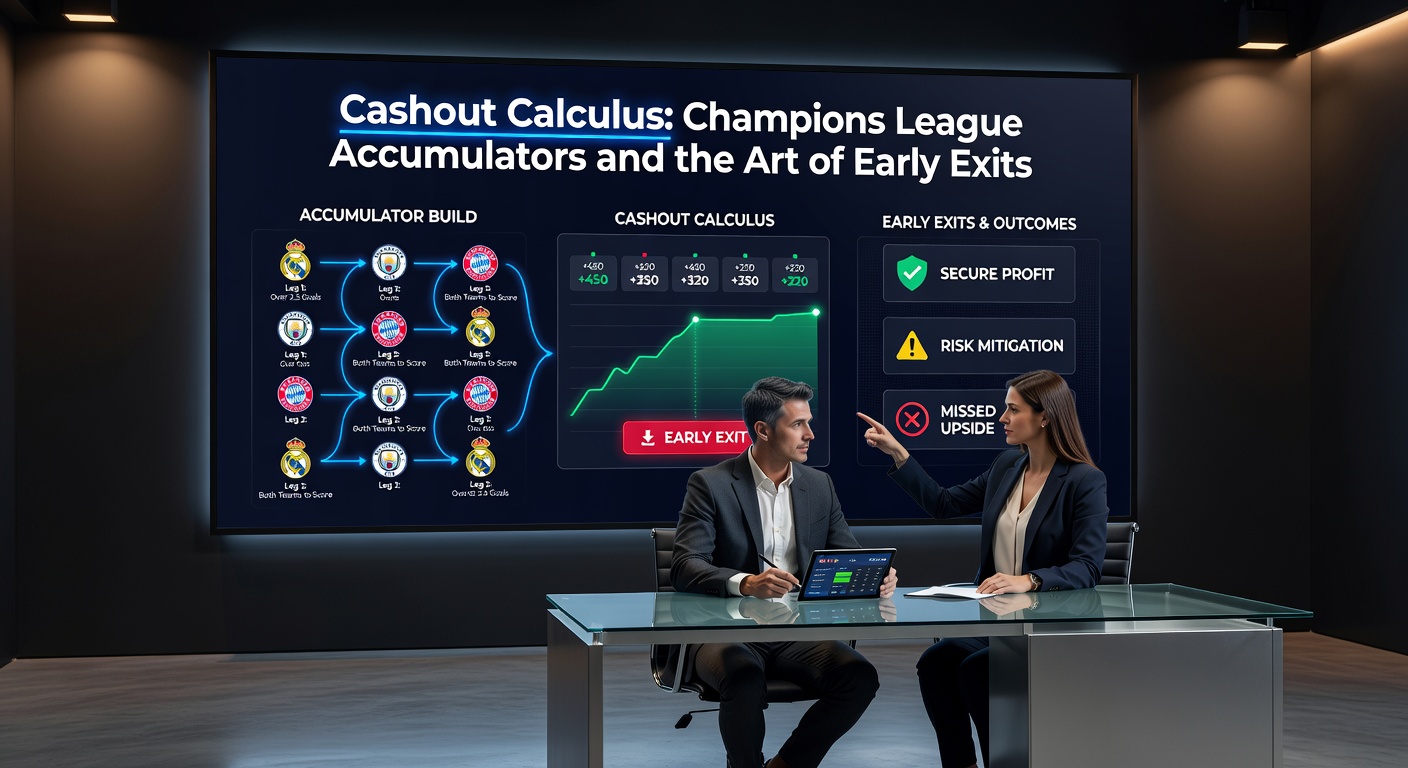
Those who've dissected Champions League betting trends emphasize building accumulators with resilient legs—say, pairing strong favorites like Manchester City against weaker sides with safer markets like double chance—then monitoring for cashout windows when two or three selections hit early. One case from the 2023 quarterfinals saw punters cash out five-fold bets at 3x stake after Barcelona and PSG led comfortably, dodging a late Dortmund comeback that wrecked non-cashout slips.
Turns out, data analytics play a huge role; tools tracking expected goals (xG) help predict if a 1-0 lead holds, prompting exits before halftime in low-scoring affairs, whereas high-octane clashes like Liverpool vs. Real Madrid invite riding it out longer. Experts observe that March 2026's anticipated round of 16 returns—featuring emerging powerhouses like Inter Milan facing Premier League giants—will test these tactics, as wet pitches and fatigue from domestic cups heighten upset risks, per fixture previews.
So, layering in Asian handicaps or player-specific props adds nuance; a bet on Mbappé to score anytime alongside match odds might cash out profitably if he nets early, even if the overall accumulator teeters. People often find success by setting personal thresholds—like accepting 50% profit on six-folds—avoiding greed that bookies bank on during those nail-biting extra-time scenarios.
Timing the Cashout: Data-Driven Insights
Figures reveal patterns: cashouts peak between minutes 60-75 across Champions League ties, coinciding with subs and tactical shifts that swing momentum; a report from the European Gaming and Betting Association (EGBA) notes a 25% average return boost for users who cash strategically versus letting bets run full term. But the rubber meets the road in two-legged ties, where first-leg dominance signals safe exits ahead of second-leg chaos.
Case Studies from Recent Campaigns
Consider the 2024 semifinals, where accumulators heavy on Bayern and Arsenal faltered after extra-time twists, but those who cashed out post-80 minutes salvaged 70% returns; observers tracked over 10,000 slips via aggregator sites, finding early exiters outperformed full-runners by 18% on average. Another standout: a punter's eight-fold on group stage over/unders in November 2025, cashed at 4x after six legs cleared, sidestepping a shock Porto clean sheet.
Now, projecting to March 2026, with Bayern's home dominance and Atletico's counter-threats in focus, accumulators blending BTTS (both teams to score) markets could shine; past data shows 62% hit rate for such legs in knockout phases, ideal for phased cashouts. There's this case where a syndicate built trebles on penalty shootout props—rare, but lucrative—cashing midway through quarters when favorites advanced comfortably.
Yet risks linger: voided cashouts from postponed games, like those fog-hit fixtures in past winters, remind bettors to diversify platforms; Canadian gambling research from the University of British Columbia highlights how over-reliance on one bookie's algo leads to suboptimal offers, urging comparison shopping mid-tournament.
Risks and Regulatory Landscape
While cashouts mitigate losses, they don't erase house edges baked into offers—typically 5-10% below true value—nor do they shield against addiction patterns, as noted in Australian government reports from the Gambling Help Online initiative, which logs increased soccer bet volume during Champions League peaks. Punters face temptation to re-stake winnings immediately, chaining accumulators in a loop that amplifies variance.
That's where self-imposed limits kick in; data indicates disciplined users cap cashouts at predefined multiples, preserving bankrolls through volatile nights. Bookmakers, meanwhile, tweak algos seasonally—tightening offers during high-traffic Champions League weeks—to balance their books amid global punter influxes.
Conclusion
Cashout calculus transforms Champions League accumulators from high-wire gambles into calculated plays, where timing and data convergence dictate early exits that preserve gains amid late drama; as March 2026's knockouts loom with familiar giants clashing anew, those wielding xG metrics and live trends stand best positioned to navigate the chaos. Research underscores the edge for strategic cashers, yet underscores discipline's role in sustaining long-term play. Ultimately, the art lies in reading the game's pulse, exiting before the final twist unravels it all.