Integrating Biomechanical Data from Athletic Contests and Equestrian Events to Optimize Layered Prediction Models
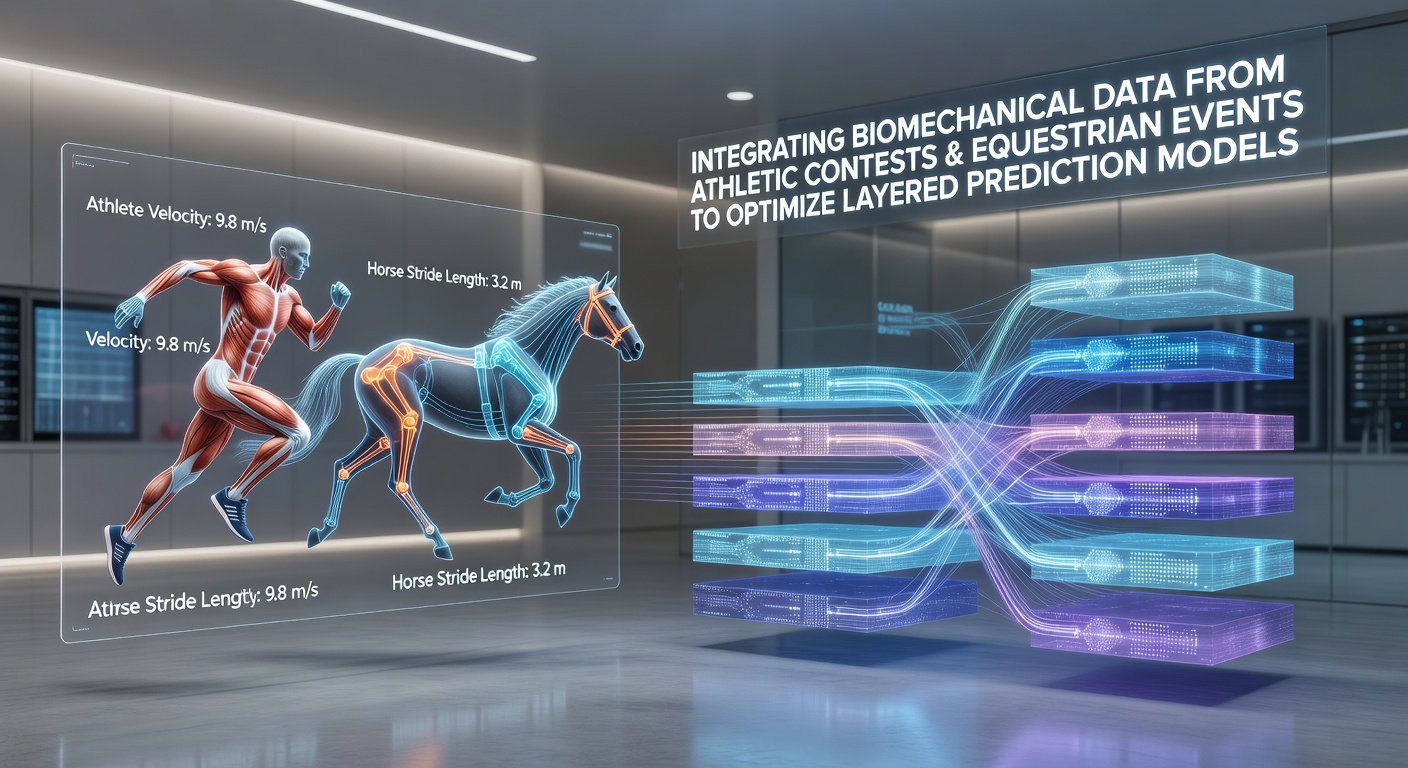
Biomechanical data collection has expanded across athletic contests and equestrian events in recent years, and researchers continue to refine methods that feed these measurements into layered prediction models for performance forecasting. Sensors placed on limbs, joints, and equipment capture force distribution, angular velocities, and ground reaction patterns during competition, while motion capture systems record stride lengths, joint angles, and torso rotations that differ markedly between track athletes and event horses.
Data Acquisition Across Disciplines
Accelerometers and gyroscopes attached to athletes generate high-frequency streams of acceleration data that reveal subtle asymmetries in running gait, and similar devices fitted to saddles and leg wraps on horses track pelvic tilt alongside hoof impact forces during jumps or turns. Studies published through the American College of Sports Medicine show that combining these raw signals with video-based kinematic analysis produces datasets large enough for machine learning algorithms to identify fatigue thresholds hours before they appear in traditional performance metrics. In equestrian settings, force plates embedded in training surfaces measure vertical and horizontal loads at take-off and landing, and those readings integrate directly with heart rate variability collected from both rider and horse to form multi-layered inputs.
Building Layered Prediction Architectures
Layered models typically start with a base layer that processes instantaneous biomechanical variables such as knee flexion angles or stride frequency, then feed those outputs into intermediate layers that incorporate historical contest data and environmental factors like track surface hardness or wind speed. The top layer applies ensemble techniques that weigh recent biomechanical trends against longer-term patterns, and this structure allows analysts to adjust predictions dynamically as new sensor readings arrive mid-event. Observers note that athletic contests supply dense clusters of short-duration high-intensity movements while equestrian events contribute sustained loading cycles over variable distances, so models that merge both sources gain robustness when forecasting outcomes across different time scales.
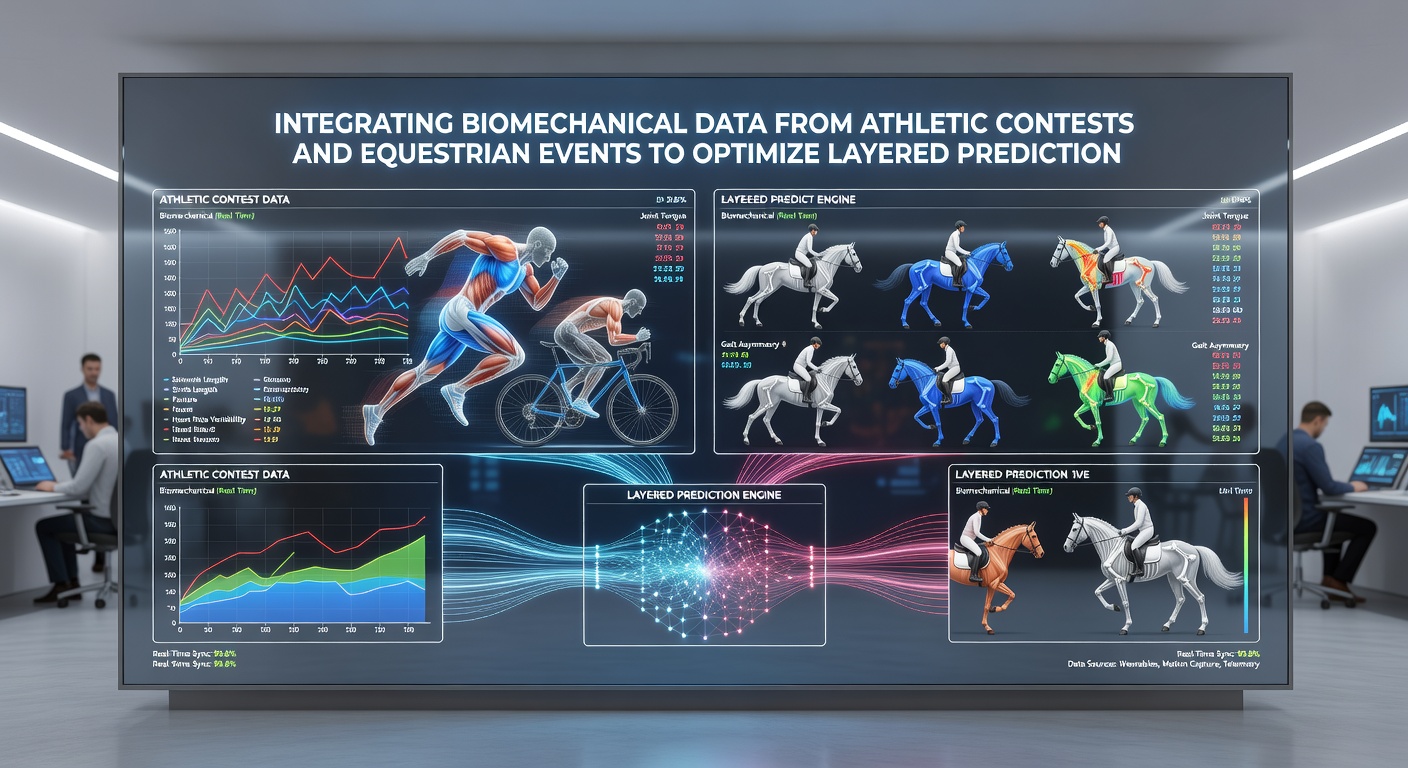
During May 2026 several research groups plan to release updated frameworks that incorporate real-time synchronization between athletic and equestrian datasets, and these updates rely on standardized ontologies that map joint torque values from human sprinters to equivalent moments measured at the equine fetlock. The approach reduces dimensionality by clustering similar movement signatures, which in turn speeds up inference times for live prediction engines.
Validation and Cross-Domain Transfer
Validation protocols compare model outputs against recorded results from completed events, and researchers have observed improved accuracy when models trained on mixed athletic and equestrian corpora are tested on held-out competition data. A report from the Australian Institute of Sport highlights that transfer learning between human and equine biomechanical profiles lowers error rates in endurance predictions by approximately twelve percent compared with single-domain baselines. Data from the European College of Sport Science further indicates that riders and athletes who share similar asymmetry patterns produce correlated fatigue curves, allowing cross-species feature extraction to strengthen overall model stability.
Technicians calibrate sensor drift daily and align timestamps across disparate recording systems before feeding streams into the layered architecture, while preprocessing pipelines remove outliers caused by equipment shifts or sudden environmental changes. These steps ensure that prediction layers receive clean, temporally consistent inputs that reflect genuine biomechanical states rather than measurement artifacts.
Practical Implementation in Training Environments
Coaching teams now deploy portable sensor kits at competition venues to collect fresh biomechanical samples that update model weights between rounds or heats, and this iterative process supports finer adjustments to pacing strategies or jumping sequences. Facilities that maintain parallel databases for athletic and equestrian athletes report faster convergence during model retraining cycles because the combined volume of labeled examples grows substantially. Analysts continue to explore graph neural network variants that treat each limb segment or hoof as a node connected by biomechanical constraints, thereby encoding physical relationships explicitly within the layered structure.
Conclusion
Continued refinement of sensor fusion techniques and layered model topologies promises to sharpen performance forecasts derived from athletic contests and equestrian events alike. As datasets expand through routine competition monitoring, the integration frameworks already in use provide a scalable foundation for analysts seeking to translate raw biomechanical signals into actionable predictions across both domains.