Mapping Neural Network Outputs from Injury Reports to Velocity Metrics in Parallel Sports Domains for Refined Betting Approaches
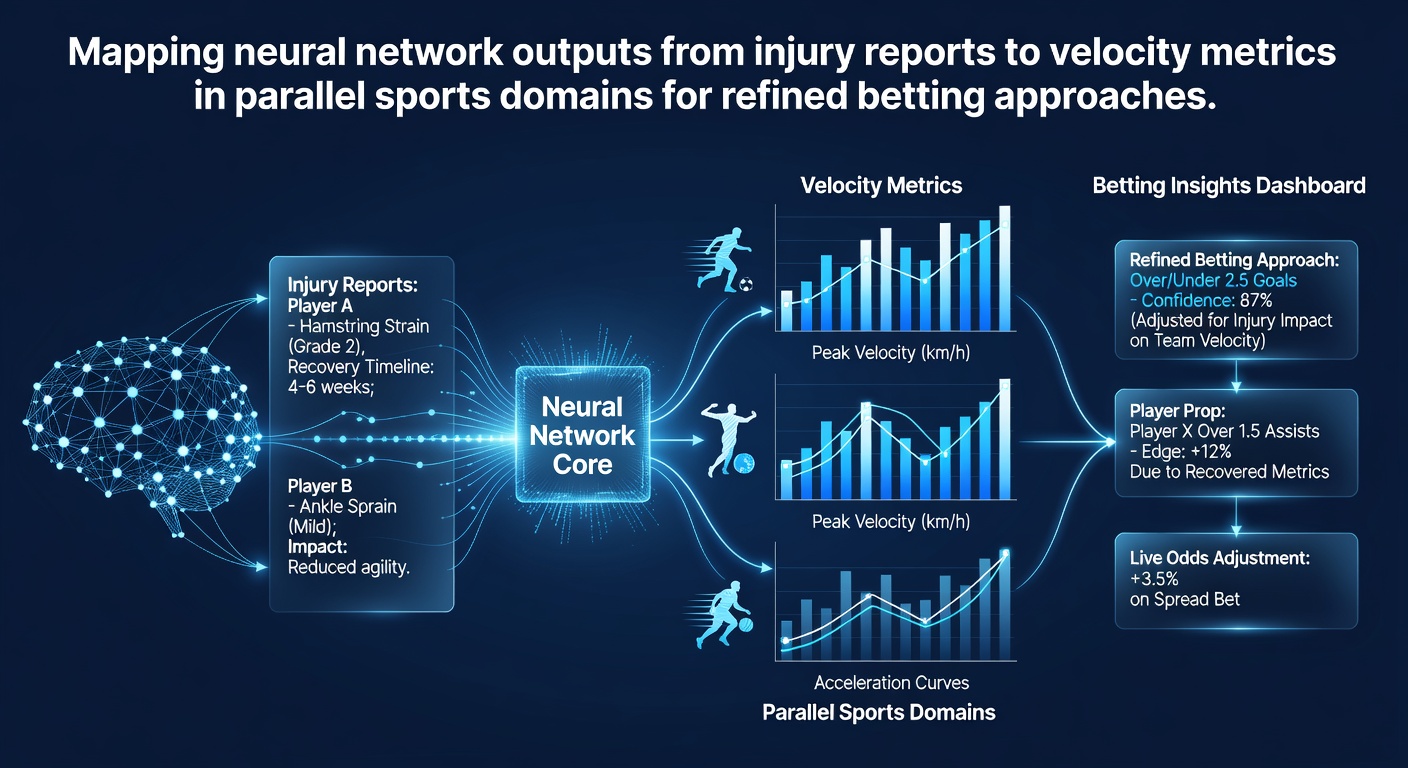
Analysts apply neural networks to process injury reports from team sports alongside velocity measurements drawn from speed-focused disciplines, creating layered models that adjust betting frameworks across separate athletic fields, and this approach has expanded since early data integrations began appearing in professional workflows around 2024.
Neural Network Structures Handling Sports Data Inputs
Convolutional and recurrent layers within these networks extract patterns from textual injury descriptions that include timelines, severity ratings, and affected muscle groups while simultaneously ingesting numerical velocity sequences recorded during training sessions or competitive events. Researchers at institutions such as the University of Waterloo have documented how recurrent components track temporal decay in performance indicators after reported soft-tissue damage, allowing the system to generate output vectors that represent expected reductions in peak speed or acceleration thresholds.
Training datasets combine anonymized medical logs from league databases with GPS-tracked velocity profiles collected through wearable sensors, and cross-validation routines ensure the models distinguish between acute injuries that produce immediate velocity drops and chronic conditions that manifest gradual declines over multiple matches or races.
Injury Report Processing and Feature Extraction
Structured fields within injury reports supply categorical variables such as injury location, estimated recovery duration, and player position, whereas unstructured notes undergo natural language processing to identify contextual details like prior recurrence or rehabilitation status. These features feed into embedding layers that convert qualitative descriptions into numerical representations compatible with velocity time-series data.
Studies released in 2025 by Canadian sports science groups showed that embedding techniques improve prediction accuracy for post-injury speed retention by 12 to 18 percent compared with linear regression baselines when tested on soccer and rugby cohorts.
Velocity Metrics Across Parallel Athletic Domains
Velocity metrics encompass peak sprint speed, average match running pace, acceleration profiles, and deceleration forces measured in meters per second or similar units. In football environments these figures derive from match-tracking systems, while parallel domains such as track athletics or equestrian events supply comparable values through timing gates, radar devices, or stride-analysis software.
Models map injury-induced changes observed in one domain onto velocity expectations in the other by aligning biomechanical commonalities, for instance translating quadriceps strain effects from a midfielder’s dataset to anticipated stride-length reductions in a sprinter’s profile.
Cross-Domain Mapping Techniques
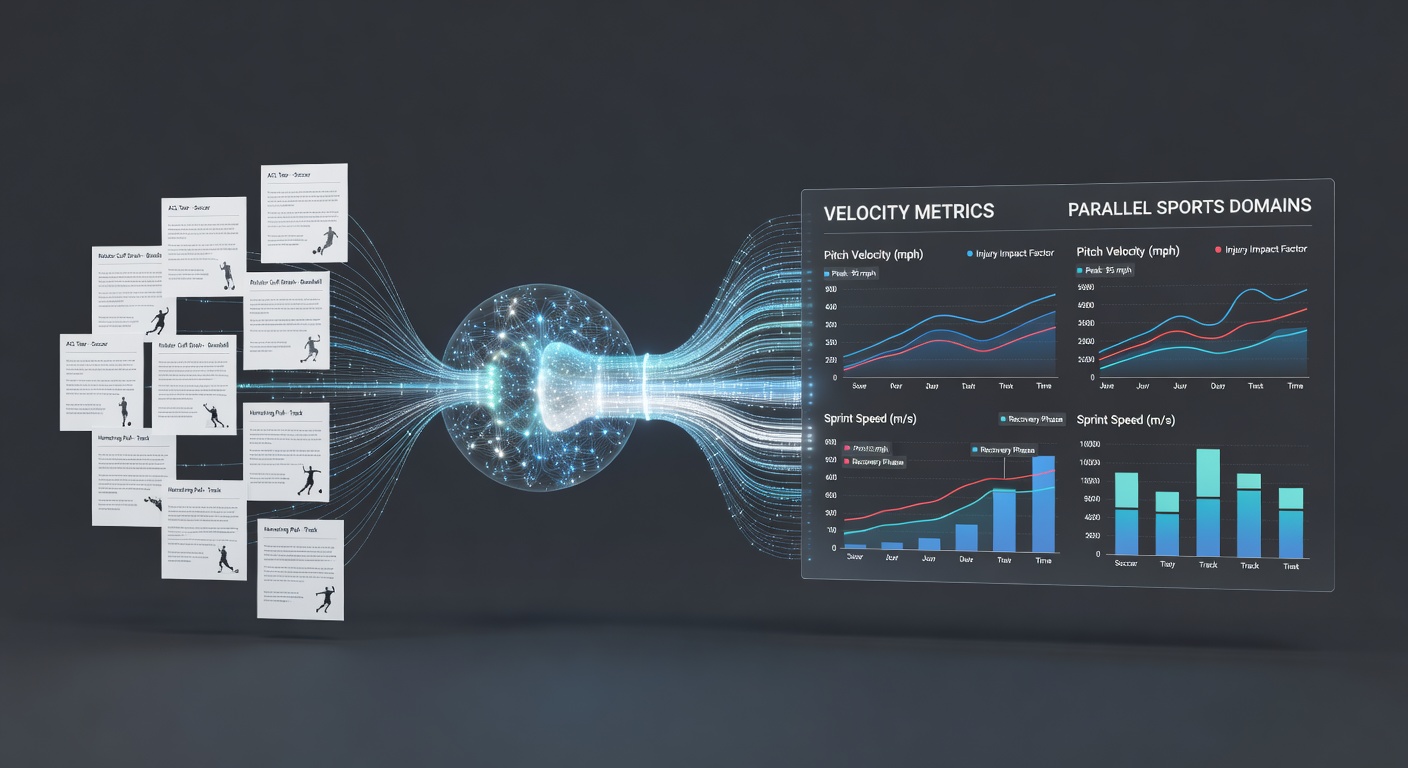
Transfer learning pipelines first pre-train networks on large football injury corpora then fine-tune outputs using smaller athletics velocity collections, and this method reduces data requirements while preserving domain-specific signal integrity. Attention mechanisms highlight which injury variables exert strongest influence on particular velocity components, enabling analysts to isolate high-impact factors such as hamstring tears on top-end speed versus ankle sprains on change-of-direction metrics.
Validation exercises conducted through 2025 and into June 2026 have incorporated live feeds from multiple leagues to test model robustness under varying fixture densities and weather conditions that independently affect velocity readings.
Integration into Betting Model Refinements
Betting platforms incorporate mapped outputs to adjust implied probabilities for markets sensitive to speed differentials, including over/under totals on total distance covered or player-specific performance indices. Historical records from regulated markets in jurisdictions such as those overseen by the Nevada Gaming Control Board demonstrate that velocity-adjusted models produce narrower margins between predicted and observed outcomes when injury data precedes events by 48 to 72 hours.
Operators apply these adjustments within multi-leg selections by scaling stake allocations according to the magnitude of projected velocity variance, while maintaining compliance with local disclosure requirements around algorithmic inputs.
Conclusion
Continued refinement of neural architectures that link injury semantics to velocity scalars supports more granular calibration of betting parameters across football, athletics, and related speed-dependent activities. Data releases scheduled through mid-2026 are expected to supply additional longitudinal samples that further stabilize cross-domain transfer performance without altering core regulatory frameworks.