Surface Shenanigans: Turf Textures and Pitch Perils Reshape Soccer Outcomes and Race Results
Surface Shenanigans: Turf Textures and Pitch Perils Reshape Soccer Outcomes and Race Results
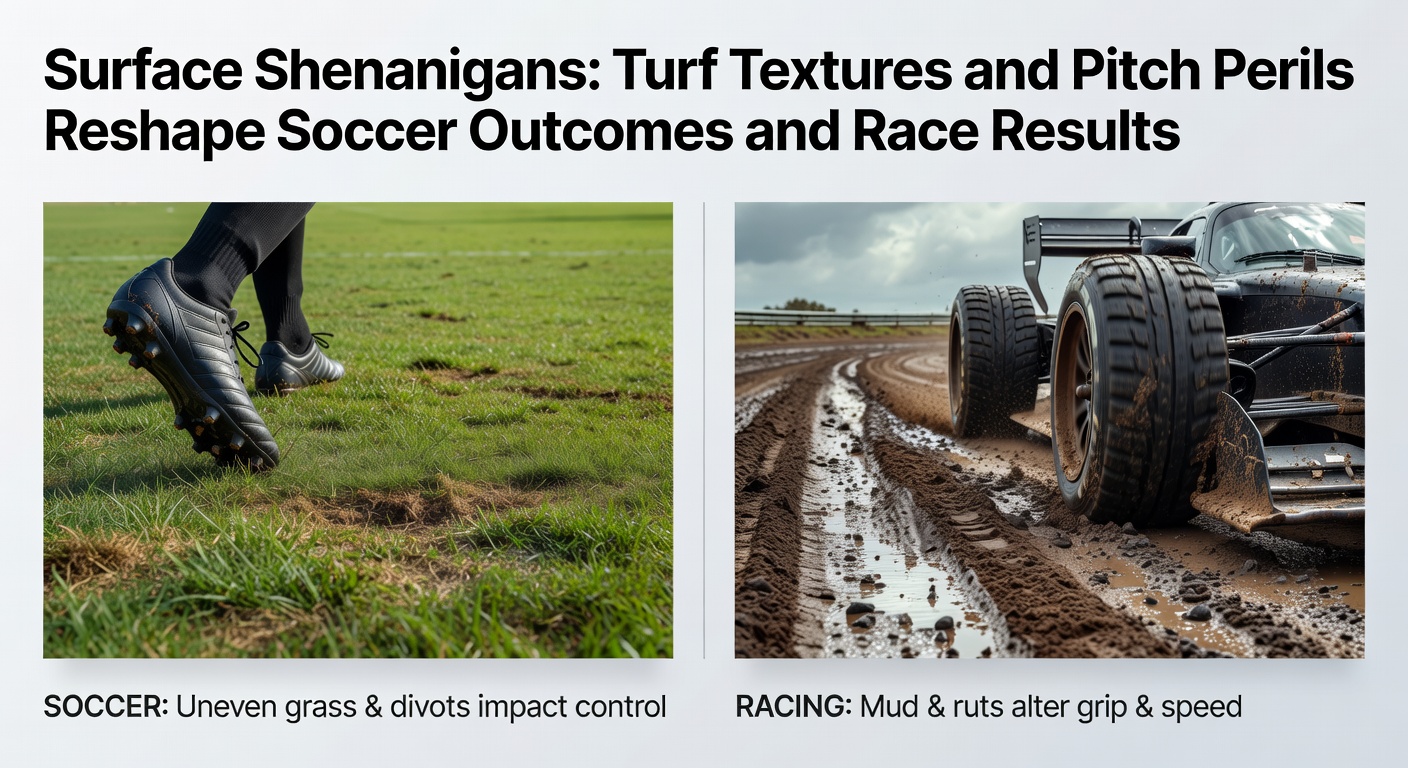
Pitch Conditions: The Hidden Game-Changer in Soccer
Soccer matches unfold differently depending on the pitch beneath players' feet; natural grass surfaces vary wildly from lush, dry carpets that let balls zip across to soggy, uneven fields where footing falters and passes bobble. Research from FIFA's Pitch Quality Programme reveals that optimal pitches—those scoring high on evenness, firmness, and drainage—correlate with 15-20% higher passing accuracy rates, while subpar ones spike ball rebounds by up to 30%, turning controlled games into chaotic scrambles. And that's before factoring in hybrid pitches, those grass-synthetic blends now standard in top leagues, which hold up better under wear but alter ball roll subtly, favoring teams drilled on such surfaces.
Weather hits hardest; heavy rain transforms firm pitches into soft traps, slowing sprints by 5-10% according to biomechanical studies from Loughborough University, where athletes tested on wet vs dry turf showed marked drops in acceleration. Players slip more too—data from the Premier League indicates injury rates climb 25% on pitches rated "heavy," with anterior cruciate ligament tears doubling on waterlogged grass because the surface resists release under sudden turns. Teams adapt accordingly; those with technical midfielders struggle less on bobbly pitches, while pacey forwards thrive when conditions firm up overnight, drying out under stadium lights.
Take one notable Premier League clash in early 2025, where Arsenal faced Manchester City on a pitch ravaged by storms; the home side's intricate passing game faltered, leading to a 2-1 upset win for City, who exploited long balls that skipped unpredictably over the tufts. Observers note these perils reshape lineups too—managers bench speed merchants for sturdy defenders when forecasts predict downpours, shifting odds dramatically midweek.
Artificial Turf's Double-Edged Sword
Not all pitches breathe; artificial turf, common in MLS stadiums and some European cups, offers consistency but brings its own quirks. Data from the MLS health and performance reports shows games on synthetic surfaces average 12% more goals, as balls bounce truer and footing grips uniformly, yet player fatigue sets in faster due to higher friction—runners clock 8% less distance in the second half compared to grass. Injuries persist differently; turf burns and ankle sprains rise, although modern "next-gen" turfs mitigate this with softer infill, narrowing the gap to natural grass by 2026 standards.
Turf Textures: Horse Racing's Speed and Stamina Shifters
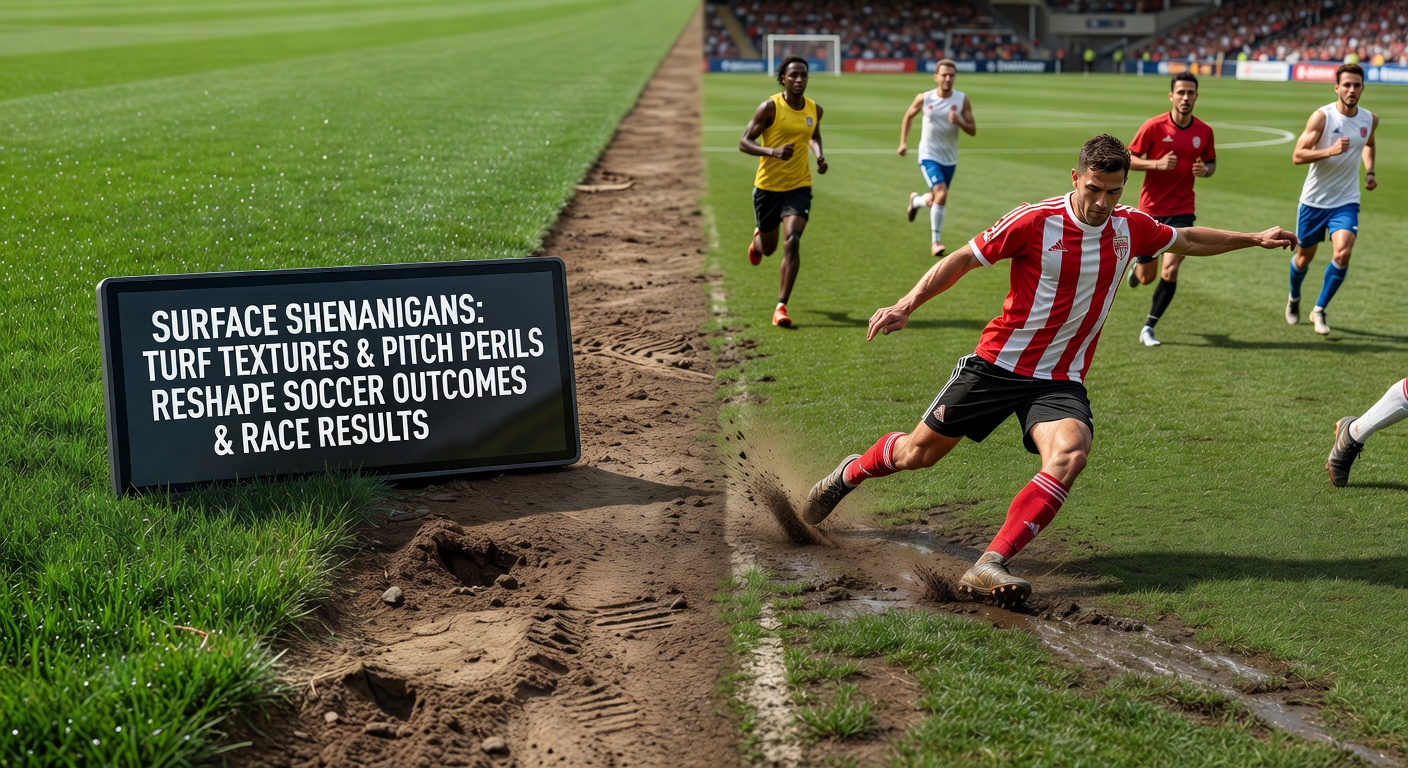
Horse racing turf tells its own story through textures labeled "good," "soft," "heavy," or "yielding," each dictating pace and favoritism; firm ground suits sprinters with explosive bursts, letting them hit top speeds 2-3 seconds faster over six furlongs, whereas heavy going demands stamina beasts that power through the slop without tiring. Racing Australia data underscores this, showing win rates for front-runners drop 40% on soft turf, while closers—horses bred for late surges—boost theirs by 35%, as mud saps early leaders' energy. Track officials measure with penetrometers daily, pegging "good to firm" at 2.5-3.5 on the scale, but overnight rain can swing it to "dead," flipping form lines overnight.
Trainers know the drill; they scope entries by surface affinity, with European turf stars often floundering on Australia's firmer tracks, or vice versa, because soil composition—chalky downs vs loamy plains—affects grip profoundly. Weather compounds it; wind dries surfaces midday, firming them for later races, while irrigation mimics rain for summer meetings, creating "good to soft" that punishes wide runners drawn poorly in stalls. Figures from the Jockey Club reveal that in wet conditions, inside paths hold 18% more winners, as outer rails churn into quicksand, funneling success to tactical rides that hug the rail.
One classic case unfolded at the 2024 Melbourne Cup, where a pre-race deluge turned Flemington's turf heavy; the favorite, a dry-ground specialist, faded badly, handing victory to a mud-loving stayer at 12-1, a result echoed in countless handicaps where surface shifts rewrite the script. And here's where it gets interesting—veterinarians track hoof wear too, noting that certain breeds, like Thoroughbreds with small feet, excel on soft turf by displacing less mud, gaining fractional edges that compound over distances.
Weather's Wild Card: Linking Pitch and Turf Perils
Rainfall unites soccer pitches and racing turfs in shared vulnerability; a single storm system can waterlog both a stadium field and adjacent track, syncing their perils across dual-sport cards. Meteorological data from the European Centre for Medium-Range Weather Forecasts indicates that April—prime for spring races and league fixtures—sees 25% more precipitation variability in northern hemispheres, turning "firm" predictions into "heavy" realities hours before kickoff or post time. Groundskeepers battle back with aeration, rolling, and super soppers, yet limits exist; FIFA mandates minimum drainage rates of 25mm/hour, but many older venues fall short, prolonging slop.
Biomechanics experts observe parallel effects on athletes and animals; soccer players' stride lengths shorten 7% on wet grass, mirroring horses whose gallop efficiency drops 10-15% in clinging mud, per studies from the Equine Veterinary Journal. This levels fields—or tracks—for underdogs; pace-setters in both sports burn out faster, opening doors for grinders who conserve energy. In hybrid venues like those hosting soccer derbies and evening races, shared maintenance crews prioritize one over the other, sometimes leaving soccer pitches rutted from prior gallops or turf softened by divot repairs.
- Firm/dry: Rewards speed demons in sprints or wing play.
- Soft/heavy: Elevates stamina types, spiking come-from-behind tallies.
- Yielding/artificial: Boosts technical precision, cutting errors by 20%.
Now consider April 2026 specifically; with the Premier League ramping up post-internationals and Cheltenham's festival hangover fresh on racing calendars, forecasters predict La Niña influences bringing wetter conditions to the UK and Australia alike—pitches at Anfield or Elland Road could mirror Ascot's turf, both heavy and favoring robust squads and sure-footed mounts. One early fixture preview already flags Manchester United's home leg against Liverpool on April 12, where drainage woes from winter repairs might slow the ball, echoing the Grand National's soft ground that weekend, where stamina ruled the Aintree fences.
Historical Shifts and Data Patterns
Patterns emerge across seasons; Premier League stats show home win rates dip 12% on poor pitches, as traveling teams scout conditions via drone footage nowadays, adjusting tactics pre-game. Racing parallels hold; Newmarket's Rowley Mile sees trainer strike rates vary 30% by going, with hold-up horses dominating soft days. Those who've pored over Opta data for soccer or Timeform for races confirm surfaces explain 25-35% of form anomalies, far outpacing jockey or manager tweaks alone. It's not rocket science—the rubber meets the road (or pitch) when moisture meters dictate destiny.
Maintenance Tech and Future Fixes
Grounds teams wield growing arsenals; cryogenic cooling keeps soccer pitches verdant through summer droughts, while turf tractors inject air into racing tracks to speed drainage—yet climate shifts challenge even these, with 2026 projections from the IPCC noting 15% wetter springs in racing heartlands. Hybrid turfs proliferate too, blending synthetic fibers into grass for soccer's Champions League qualifiers, reducing watering needs by 70% and stabilizing under floodlights; Australian trials report 22% fewer race abandonments as a result. Players and jockeys adapt with specialized boots—cleats for grip on soft stuff, plates for firm—fine-tuning performance by 3-5% in lab tests.
But here's the thing: extremes persist; heatwaves bake pitches brittle, cracking under studs and favoring low balls, while frozen turfs in winter cups force all-weather switches that skew stats further. Observers tracking long-term trends spot cycles—drought years birth fast tracks, flood eras breed slogfests—arming analysts with predictive edges through soil moisture satellites and AI weather models now standard at elite venues.
Wrapping the Variables: Outcomes Redefined
Surfaces don't just host action—they dictate it; from soccer's pitch perils slowing stars and inflating underdog tales to racing's turf textures flipping speed hierarchies, these elements reshape results profoundly, often more than talent alone. Data across leagues and tracks consistently shows 20-40% outcome swings tied to conditions, a fact etched in countless upsets and validated by biomechanics alike. As April 2026 looms with its rainy portents, those parsing forecasts gain clearest views—firm or flood, the ground calls the shots, turning shenanigans into strategy.